Warming the glue pot.

-
Warming the glue pot. Seems happiest around 60°C. Just putting in a couple of reinforcement blocks today.
-
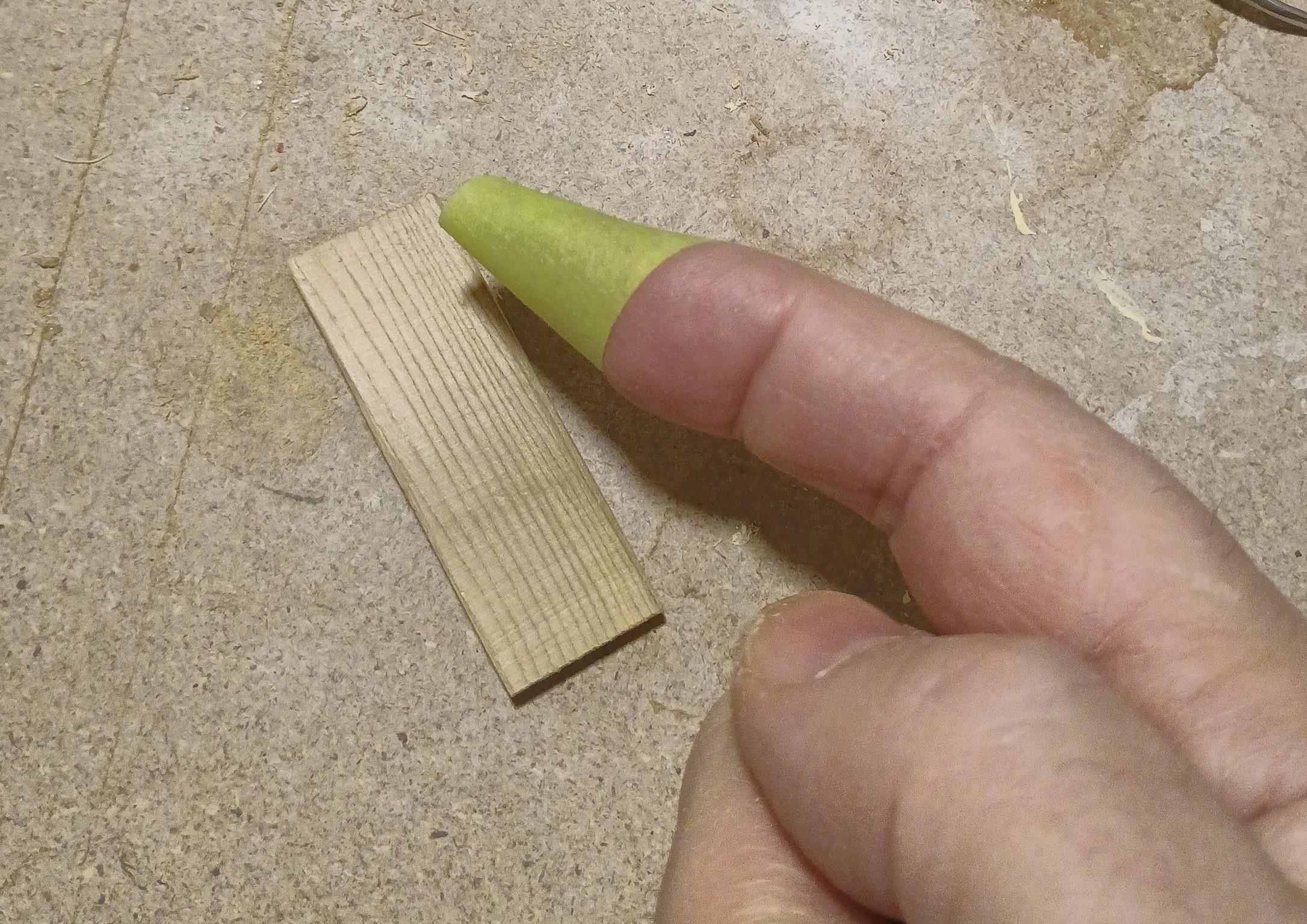
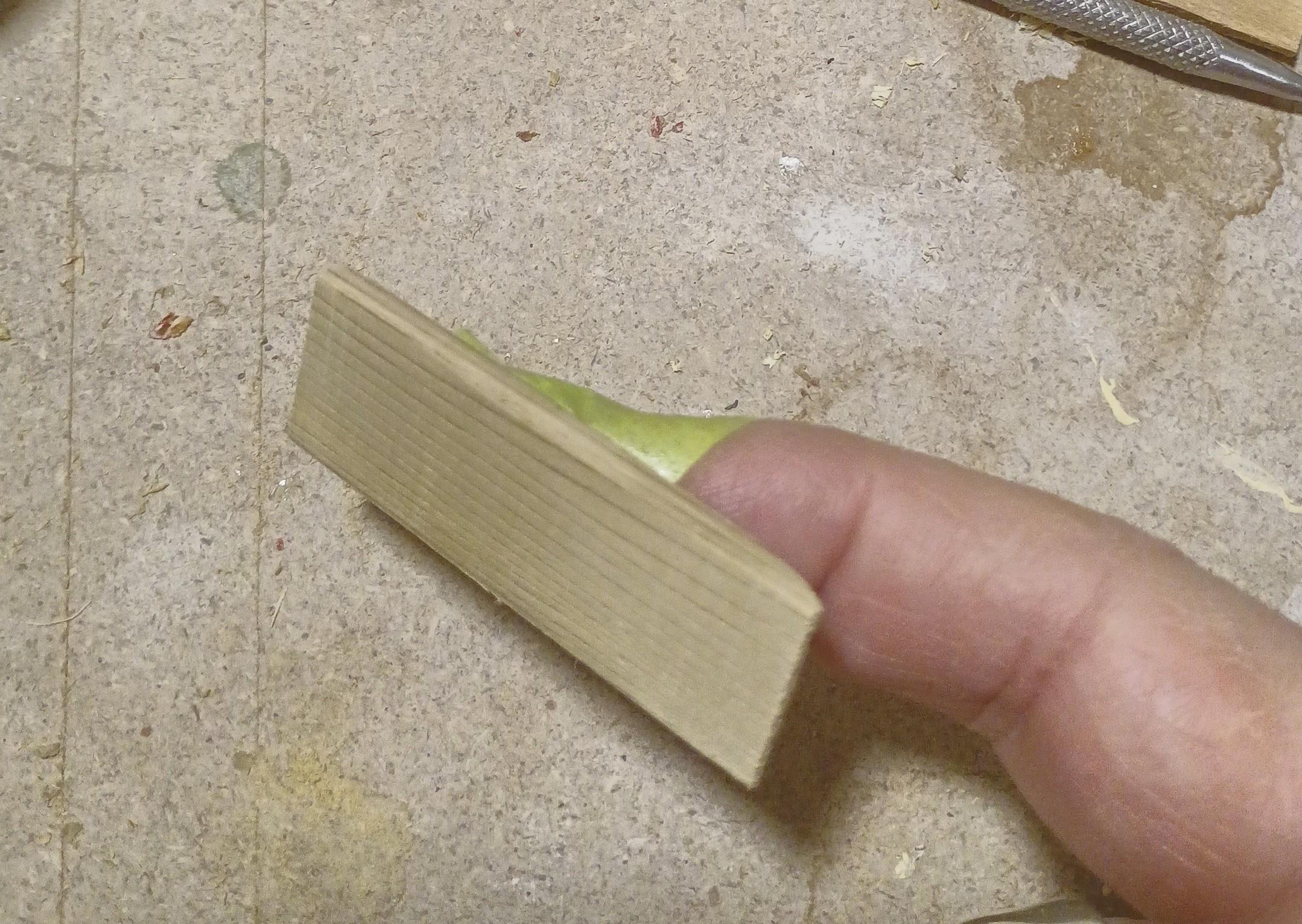
Here's my trick for placing a reinforcement block inside the guitar body I can barely reach, let alone hold it with multiple fingers.
Painter's tape (not too tacky) stuck to my fingernail and then inverted grabs the little piece of cedar nicely, with glue smeared on, ready to be placed.
A couple of wrinkled tape pieces inside the guitar (verified with an inspection mirror) give me a tactile positioning aid.
I use cedar because the top is cedar, and I want similar TCE* and humidity behaviour.
-
*Thermal coefficient of expansion. This is a common consideration in mechanical engineering, and applies here in spades, as wood is very hygroscopic.
-
Incidentally, hide glue has this nice behaviour in this application which is a 'scrub joint' effect.
When you put a slippery glue block on a surface, it's normally hard to position and stabilize without clamps. Hide glue tho' does this thing where you can scrub it back and forth then suddenly it seizes up. For a light wood piece you don't need clamping, which is very nice.
The prepared commercial versions of hide glue (eg 'old brown glue' or Titebond) don't do this apparently.
-
Oh - another maybe counterintuitive element of reinforcing glued wood cracks is that the grain of the support block should not go opposite of the top's grain direction.
It would seem like a good idea (ie like making plywood), but with expansion and contraction, opposite grain direction could pop the crack open again. (Plywood has multiple glued layers plus massive compression.)
Better is parallel, but with a slight misalignment.
-
Thanks for the tip!